
Writing task 2
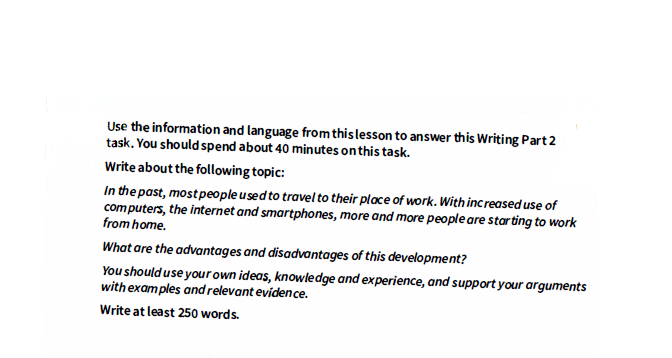
Back in time, most people used to go to work by commuting a distance; but in the long run and some years after the emergence of computers, smartphones and internet, people commenced to work from home via these new accessible means. Although this might seem to be beneficial, it undoubtedly has some disadvantages as well.
On the positive side, if the breadwinner of a family works from home, he or she can save time and money spent on travelling on public or private transports.
Instead, they can spend more time with their families at home. This will be followed by less traffic, exhaust fuel and pollution. Furthermore, even people from outback regions can secure a job without worrying about commuting expenses. Therefore, people can have a variety of choices and opportunities to find a job, and they will become more proficient and knowledgeable about technology.
On the downside, when telework appeals to a broad number of people, laziness and sedentary jobs will be encouraged. So many problems and diseases will ensue, such as scoliosis, poor eyesight, etc. It will also destroy the concept of “home”. Which means “home” won’t be a place for restoring morale and relaxing anymore. All work hours and family-time plans will be disorganized when there is no boundary and balance between work and life. Finally, it will maximize the use of cellphones and people get more and more busy with the internet regardless of age and the concept of “family” will also disappear.
In spite of the fact that having a remote job may make people capable of learning new technological skills and saves more time and money, it can lead to a whole society of individuals addicted to social media facing so many physical and spiritual problems.
Get the Weekly English Kit 📬
New words, one handy idiom, and a 2-minute quiz — delivered to your inbox to keep your streak alive.
 Related Questions