
Writing task 1 - ilets
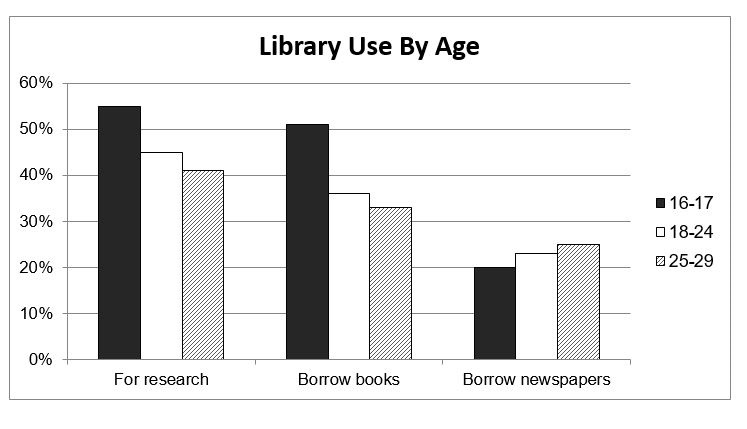
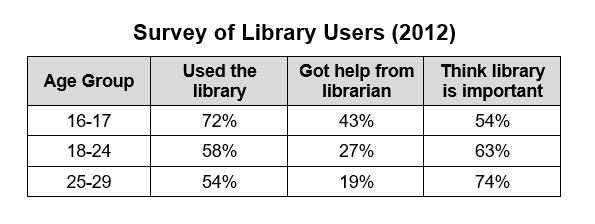
The table and chart show data from a survey of library users.
Summarise the information by selecting and reporting the main features, and make comparisons where relevant.
The table and chart show information about how many youngsters at 16-29 ages used the library, and what they used the library for in 2012. It show the data in percentage.
Overall, the majority user of the library was the youngest. Most of the user considered that the library is necessary for their academic study.
In 2012, 72 percent of teenager spent their time in the library. The figures slightly fell for young adults who from 18-24 to 25-29 years old, was 58% and 54% respectively. Only under 44% of library user got help from the staff while above 53% of whom went to the library because of its importance. The figures for the youngest group was the highest in "got help from librarian" category but the smallest in "think the library is important" category. In contrast, only 19% of oldest people got help, but 74% of them thought the library is important.
More than 40% of young people went to the library for their research. Around 51-54% of teenager spent time on studying in the library and borrow books compared to only 20% of whom went to the library for borrowing newspapers. In contrast, the most users who interested in newspapers were in 25-29 ages.
Top answer
The table and chart show information about how many youngsters (wrong word) at 16-29 ages (wrong phrasing) used the library, and what they used the library for in 2012. It show the data in percentage . (wrong form) Overall, the majority user (wrong form) of the library was the youngest (missing word).
- The table and chart show information about how many youngsters (wrong word) at 16-29 ages (wrong phrasing) used the library, and what they used the library for in 2012.
- It show the data in percentage .
- (wrong form) Overall, the majority user (wrong form) of the library was the youngest (missing word).
- Most of the user (wrong form) considered that the library is necessary for their academic study.
- In 2012, 72 percent of teenager (wrong form, wrong word) spent their time in the library.
Get the Weekly English Kit 📬
New words, one handy idiom, and a 2-minute quiz — delivered to your inbox to keep your streak alive.
The table and chart show information about how many youngsters (wrong word) at 16-29 ages (wrong phrasing) used the library, and what they used the library for in 2012. It show the data in percentage
 0
0 Related Questions