
Writing task 1, hepl me please
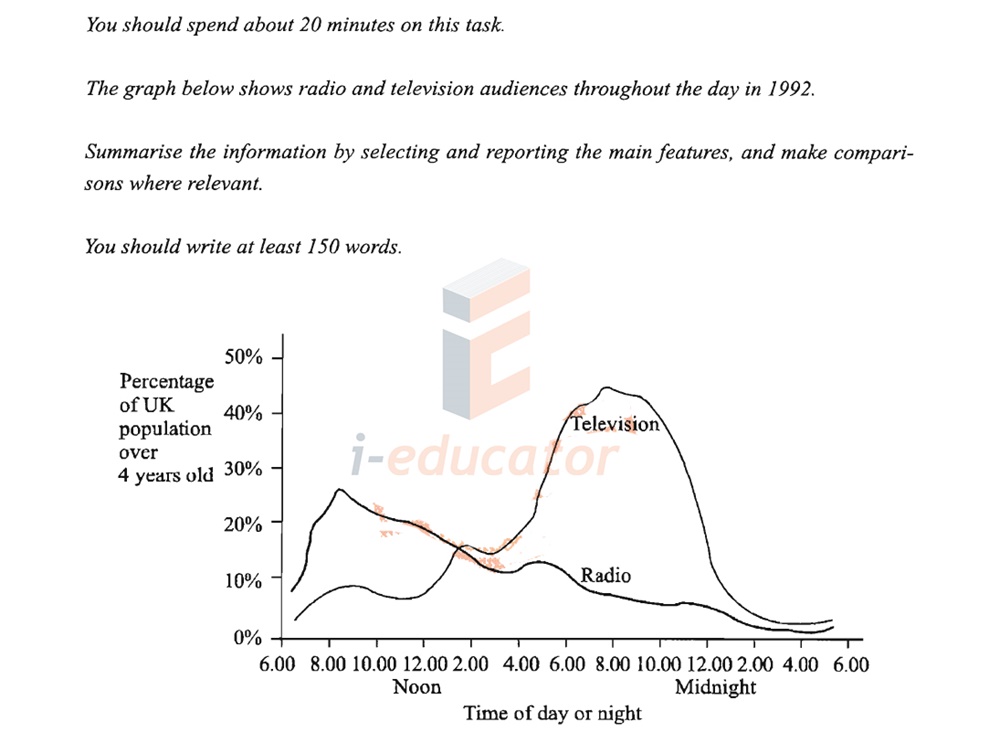
The line graph give information about the number of people use radio and television throughout the day in 1992.
A glance at the graph, it is clear that a large of the audiences listenned radio in the morning. In the contrast, television was used significantly by people in the evening. However, after midnight, there was a downward trend of number of audiences.
At 6 o'clock in the morning, there were nearly 10% of people who listenned radio, that was more than number of television audiences(around 3%). After that time, the radio audiences escalated dramtically from 6 am to 9 am and reached the peak at 26%. Nevertheness, in the rest of the day, there was a gradually decline tendency between 9am and after midnight.
In the other hand, starting at 3% at 6am, the amount of people who watched television grew considerably and hit the highest point at 8pm with 45% that was nearly eight times more than radio audiences. Since then, there was a dinimished rapidly trend of television audiences, that deceased from the peak to nearly 3% after 12pm.
Does this essay reach band 5? thank you verry much.
Top answer
An audience is a large group of people who sit in a theater to watch a movie or play or concert. It can be used in this context, but it is used as a non-count mass noun. It is incorrect to use the plural form.
- An audience is a large group of people who sit in a theater to watch a movie or play or concert.
- It can be used in this context, but it is used as a non-count mass noun.
- It is incorrect to use the plural form.
- We do not use television or radio.
- We watch TV and listen to radio.
Get the Weekly English Kit 📬
New words, one handy idiom, and a 2-minute quiz — delivered to your inbox to keep your streak alive.
An audience is a large group of people who sit in a theater to watch a movie or play or concert. It can be used in this context, but it is used as a non-count mass noun. It is incorrect to use the plural form. We do not use television or radio. We watch TV and listen to radio.
The line graph give
 0
0 Related Questions