
Task 1 TEST 9
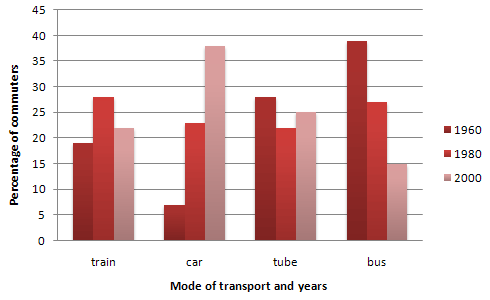
The graph below shows the different modes of transport used to travel to and from work in one European city in 1960, 1980 and 2000.
The bar chart compares the change of commuting by four different means of transports: train, car, tube, bus in a particular city in Europe over a four-decade period starting from 1960.
Overall, a downward trend was observed for the number of people traveling by bus. However, this was not the case for car usage, which overtook buses usage to become the mainstream transport in Europe.
In 1960, the bus was the most common type of transport for European commuters, with four out of ten people using the bus to reach their work. By contrast, the use of car models was the lowest. In the subsequent two decades, there was a major decrease of 25% in the proportion of bus commuters, 28% in 1980 and 15% in 2000 respectively, making the least popular models in all four categories. Also mirroring the trajectory was the percentage of people using the car for traveling, which rose rapidly to below a quarter in 1980 before reaching its peak at initial bus’s figure.
Regarding the train, its number made significant gains at approximately 28% in 1980 despite also dipping to 21% in 2000. While using the tube was relatively stable, falling from 27% of commuters in 1960 to 22% in 1980, but climbing back to 25% in 2000.
Get the Weekly English Kit 📬
New words, one handy idiom, and a 2-minute quiz — delivered to your inbox to keep your streak alive.
 Related Questions