
0
Tenacious Learner Posted 14 years ago
Grammar
Present Perfect. Timeline
Hi teachers,
Do you agree with the timeline, example, and note given?
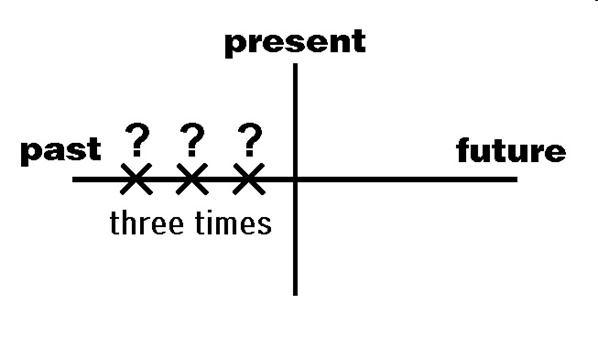
Sentence:
Sharon has phoned Robert three times, trying to invite him for dinner.
Note:
The present perfect is used when the action has occurred at indefinite points in time in the past.
Thanks in advance.
Do you agree with the timeline, example, and note given?
Sentence:
Sharon has phoned Robert three times, trying to invite him for dinner.
Note:
The present perfect is used when the action has occurred at indefinite points in time in the past.
Thanks in advance.
Top answer
Thinking Spain Do you agree with the timeline, example, and note given? Agree; except for the indefiniteness of time.
- Thinking Spain Do you agree with the timeline, example, and note given?
- Agree; except for the indefiniteness of time.
Get the Weekly English Kit 📬
New words, one handy idiom, and a 2-minute quiz — delivered to your inbox to keep your streak alive.
9 Answers
0
Thinking SpainDo you agree with the timeline, example, and note given?Agree; except for the indefiniteness of time.
 0
00
AmbienceAgree; except for the indefiniteness of time.Hi Ambiance,
Thank you for your reply.
I guess I'm lost with the terms 'definiteness' and 'indefiniteness'. Could you explain them please?
TS
00
In your definition, you say that the present perfect is used to describe events that occured at unknown times in the past, I beleive this is not exactly the case, the present perfect could be used to refer to things that took place at definite, known times. I think the present perfect is really about how you view things, relative to the present.
Consider these two examples:
-T
Consider these two examples:
-T
00
Ambience-They're allowing me full access to their services as I have participated in last Monday's opening event. I have already been to their house around eight this morning on my way to work, and I saw Harry, you go.You may well hear such things in conversation. I think that most native speakers would use the past simple there.
00
fivejedjonYou may well hear such things in conversation. I think that most native speakers would use the past simple there.How about this one?
I will not attend the Thursday class, since I will already have attended on Monday.
00
AmbienceHow about this one?I will not attend the Thursday class, since I will already have attended on Monday.That's fine.
00
AmbienceIn your definition, you say that the present perfect is used to describe events that occured at unknown times in the past, I beleive this is not exactly the case, the present perfect could be used to refer to things that took place at definite, known times. I think the present perfect is really about how you view things, relative to the present.Hi Ambi
00
Thinking SpainYour explanation will add more confusion to the students.I didn't give any explanation, I merely suggested that the "indefinite points in time" part be removed, as I belived the present perfect does not require/imply such restriction. If something, I made whatever definition you had for the present perfect even easier by stripping away some
00
I don't see anything problematic about 'indefinite times' provided we take 'indefinite' to mean unspecified (or unknown). You wouldn't say "Sharon has phoned Robert at 10 o'clock". That would be a definite (specified) time.
CJ
CJ
0 Related Questions