
0
Hayatoukrama Posted 19 years ago
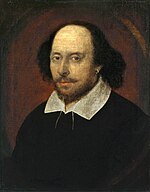
http://en.wikipedia.org/wiki/William_Shakespeare, in the famous http://en.wikipedia.org/wiki/Chandos_portrait. Artist and authenticity unconfirmed. http://en.wikipedia.org/wiki/NationalPortrait_Gallery%28United_Kingdom%29.
Sonnets were introduced by http://en.wikipedia.org/wiki/ThomasWyatt%28poet%29 in the early 16th century. His sonnets and those of his contemporary http://en.wikipedia.org/wiki/Henry_Howard%2C_Earl_of_Surrey were chiefly translations from the Italian of http://en.wikipedia.org/wiki/Petrarch and the French of http://en.wikipedia.org/wiki/Ronsard and others. While Wyatt introduced the sonnet into English, it was Surrey who gave them the rhyme scheme, meter, and division into quatrains that now characterizes the English sonnet. Sir http://en.wikipedia.org/wiki/Philip_Sidney's sequence Astrophil and Stella (http://en.wikipedia.org/wiki/1591) started a tremendous vogue for http://en.wikipedia.org/wiki/Sonnet_sequences: the next two decades saw sonnet sequences by , http://en.wikipedia.org/wiki/Edmund_Spenser, http://en.wikipedia.org/wiki/Michael_Drayton, http://en.wikipedia.org/wiki/Samuel_Daniel, http://en.wikipedia.org/wiki/Fulke_Greville, http://en.wikipedia.org/wiki/William_Drummond_of_Hawthornden, and many others.These sonnets were all essentially inspired by the Petrarchan tradition, and generally treat of the poet's love for some woman; the exception is Shakespeare's sequence. In the 17th century, the sonnet was adapted to other purposes, with http://en.wikipedia.org/wiki/John_Donne and http://en.wikipedia.org/wiki/George_Herbert writing religious sonnets, and using the sonnet as a general meditative poem. Both the Shakespearean and Petrarchan rhyme schemes were popular throughout this period, as well as many variants.
The fashion for the sonnet went out with the http://en.wikipedia.org/wiki/English_Restoration, and hardly any sonnets were written between 1670 and http://en.wikipedia.org/wiki/William_Wordsworth time. However, sonnets came back strongly with the http://en.wikipedia.org/wiki/French_Revolution. Wordsworth himself wrote several sonnets, of which the best-known are "The world is too much with us" and the sonnet to Milton; his sonnets were essentially modelled on Milton's. http://en.wikipedia.org/wiki/John_Keats and http://en.wikipedia.org/wiki/Percy_Bysshe_Shelley also wrote major sonnets; Keats's sonnets used formal and rhetorical patterns inspired partly by Shakespeare, and Shelley innovated radically, creating his own rhyme scheme for the sonnet "http://en.wikipedia.org/wiki/Ozymandias". Sonnets were written throughout the 19th century, but, apart from http://en.wikipedia.org/wiki/Elizabeth_Barrett_Browning's http://en.wikipedia.org/wiki/Sonnets_from_the_Portuguese and the sonnets of http://en.wikipedia.org/wiki/Dante_Gabriel_Rossetti, there were few very successful traditional sonnets. http://en.wikipedia.org/wiki/Gerard_Manley_Hopkins wrote several major sonnets, often in http://en.wikipedia.org/wiki/Sprung_rhythm, of which the greatest is "The Windhover," and also several sonnet variants such as the 10-1/2 line http://en.wikipedia.org/wiki/Curtal_sonnet "Pied Beauty" and the 24-line http://en.wikipedia.org/wiki/Caudate_sonnet "That Nature is a Heraclitean Fire." By the end of the 19th century, the sonnet had been adapted into a general-purpose form of great flexibility.
This flexibility was extended even further in the 20th century. Among the major poets of the early Modernist period, http://en.wikipedia.org/wiki/Robert_Frost, http://en.wikipedia.org/wiki/Edna_St._Vincent_Millay and http://en.wikipedia.org/wiki/E._E._Cummings all used the sonnet regularly. http://en.wikipedia.org/wiki/William_Butler_Yeats wrote the major sonnet http://en.wikipedia.org/wiki/Leda_and_the_Swan, which used http://en.wikipedia.org/wiki/Half_rhyme. http://en.wikipedia.org/wiki/Wilfred_Owen's sonnet http://en.wikipedia.org/wiki/Anthem_for_Doomed_Youth was another sonnet of the early 20th century. http://en.wikipedia.org/wiki/W.H._Auden wrote two sonnet sequences and several other sonnets throughout his career, and widened the range of rhyme-schemes used considerably. Auden also wrote one of the first unrhymed sonnets in English, "The Secret Agent" (http://en.wikipedia.org/wiki/1928). Half-rhymed, unrhymed, and even unmetrical sonnets have been very popular since 1950; perhaps the best works in the genre are http://en.wikipedia.org/wiki/Seamus_Heaney's Glanmore Sonnets and Clearances, both of which use half rhymes, and http://en.wikipedia.org/wiki/Geoffrey_Hill's mid-period sequence 'An Apology for the Revival of Christian Architecture in England'. The 1990s saw something of a formalist revival, however, and several traditional sonnets have been written in the past decade.
This example, Shakespeare's http://en.wikipedia.org/wiki/Sonnet_116, illustrates the form:
Let me not to the marriage of true minds (a)
Admit impediments. Love is not love (b)
Which alters when it alteration finds, (a)
Or bends with the remover to remove. (b)
O no, it is an ever fixed mark (c)
That looks on tempests and is never shaken; (d)
It is the star to every wand'ring barque, (c)
Whose worth's unknown although his height be taken. (d)
Love's not time's fool, though rosy lips and cheeks (e)
Within his bending sickle's compass come; (f)
Love alters not with his brief hours and weeks, (e)
But bears it out even to the edge of doom. (f)
If this be error and upon me proved, (g)
I never writ, nor no man ever loved.
Poetic forms: The English sonnet. From Wikipedia,
[http://en.wikipedia.org/w/index.php?title=Sonnet&action=edit§ion=2] The English sonnet
http://en.wikipedia.org/wiki/William_Shakespeare, in the famous http://en.wikipedia.org/wiki/Chandos_portrait. Artist and authenticity unconfirmed. http://en.wikipedia.org/wiki/NationalPortrait_Gallery%28United_Kingdom%29.
Sonnets were introduced by http://en.wikipedia.org/wiki/ThomasWyatt%28poet%29 in the early 16th century. His sonnets and those of his contemporary http://en.wikipedia.org/wiki/Henry_Howard%2C_Earl_of_Surrey were chiefly translations from the Italian of http://en.wikipedia.org/wiki/Petrarch and the French of http://en.wikipedia.org/wiki/Ronsard and others. While Wyatt introduced the sonnet into English, it was Surrey who gave them the rhyme scheme, meter, and division into quatrains that now characterizes the English sonnet. Sir http://en.wikipedia.org/wiki/Philip_Sidney's sequence Astrophil and Stella (http://en.wikipedia.org/wiki/1591) started a tremendous vogue for http://en.wikipedia.org/wiki/Sonnet_sequences: the next two decades saw sonnet sequences by , http://en.wikipedia.org/wiki/Edmund_Spenser, http://en.wikipedia.org/wiki/Michael_Drayton, http://en.wikipedia.org/wiki/Samuel_Daniel, http://en.wikipedia.org/wiki/Fulke_Greville, http://en.wikipedia.org/wiki/William_Drummond_of_Hawthornden, and many others.These sonnets were all essentially inspired by the Petrarchan tradition, and generally treat of the poet's love for some woman; the exception is Shakespeare's sequence. In the 17th century, the sonnet was adapted to other purposes, with http://en.wikipedia.org/wiki/John_Donne and http://en.wikipedia.org/wiki/George_Herbert writing religious sonnets, and using the sonnet as a general meditative poem. Both the Shakespearean and Petrarchan rhyme schemes were popular throughout this period, as well as many variants.
The fashion for the sonnet went out with the http://en.wikipedia.org/wiki/English_Restoration, and hardly any sonnets were written between 1670 and http://en.wikipedia.org/wiki/William_Wordsworth time. However, sonnets came back strongly with the http://en.wikipedia.org/wiki/French_Revolution. Wordsworth himself wrote several sonnets, of which the best-known are "The world is too much with us" and the sonnet to Milton; his sonnets were essentially modelled on Milton's. http://en.wikipedia.org/wiki/John_Keats and http://en.wikipedia.org/wiki/Percy_Bysshe_Shelley also wrote major sonnets; Keats's sonnets used formal and rhetorical patterns inspired partly by Shakespeare, and Shelley innovated radically, creating his own rhyme scheme for the sonnet "http://en.wikipedia.org/wiki/Ozymandias". Sonnets were written throughout the 19th century, but, apart from http://en.wikipedia.org/wiki/Elizabeth_Barrett_Browning's http://en.wikipedia.org/wiki/Sonnets_from_the_Portuguese and the sonnets of http://en.wikipedia.org/wiki/Dante_Gabriel_Rossetti, there were few very successful traditional sonnets. http://en.wikipedia.org/wiki/Gerard_Manley_Hopkins wrote several major sonnets, often in http://en.wikipedia.org/wiki/Sprung_rhythm, of which the greatest is "The Windhover," and also several sonnet variants such as the 10-1/2 line http://en.wikipedia.org/wiki/Curtal_sonnet "Pied Beauty" and the 24-line http://en.wikipedia.org/wiki/Caudate_sonnet "That Nature is a Heraclitean Fire." By the end of the 19th century, the sonnet had been adapted into a general-purpose form of great flexibility.
This flexibility was extended even further in the 20th century. Among the major poets of the early Modernist period, http://en.wikipedia.org/wiki/Robert_Frost, http://en.wikipedia.org/wiki/Edna_St._Vincent_Millay and http://en.wikipedia.org/wiki/E._E._Cummings all used the sonnet regularly. http://en.wikipedia.org/wiki/William_Butler_Yeats wrote the major sonnet http://en.wikipedia.org/wiki/Leda_and_the_Swan, which used http://en.wikipedia.org/wiki/Half_rhyme. http://en.wikipedia.org/wiki/Wilfred_Owen's sonnet http://en.wikipedia.org/wiki/Anthem_for_Doomed_Youth was another sonnet of the early 20th century. http://en.wikipedia.org/wiki/W.H._Auden wrote two sonnet sequences and several other sonnets throughout his career, and widened the range of rhyme-schemes used considerably. Auden also wrote one of the first unrhymed sonnets in English, "The Secret Agent" (http://en.wikipedia.org/wiki/1928). Half-rhymed, unrhymed, and even unmetrical sonnets have been very popular since 1950; perhaps the best works in the genre are http://en.wikipedia.org/wiki/Seamus_Heaney's Glanmore Sonnets and Clearances, both of which use half rhymes, and http://en.wikipedia.org/wiki/Geoffrey_Hill's mid-period sequence 'An Apology for the Revival of Christian Architecture in England'. The 1990s saw something of a formalist revival, however, and several traditional sonnets have been written in the past decade.
[http://en.wikipedia.org/w/index.php?title=Sonnet&action=edit§ion=3] Form
Soon after the introduction of the Italian sonnet, English poets began to develop a fully native form. These poets included Sir , , , the Earl of Surrey's nephew http://en.wikipedia.org/wiki/Edward_de_Vere%2C_17th_Earl_of_Oxford and . The form is often named after Shakespeare, not because he was the first to write in this form but because he became its most famous practitioner. The form consists of three quatrains and a couplet. The couplet generally introduced an unexpected sharp thematic or imagistic "turn" called a volta. The usual rhyme scheme was a-b-a-b, c-d-c-d, e-f-e-f, g-g. In addition, sonnets are written in , meaning that there are 10 syllables per line, and that every other syllable is naturally accented.This example, Shakespeare's http://en.wikipedia.org/wiki/Sonnet_116, illustrates the form:
Let me not to the marriage of true minds (a)
Admit impediments. Love is not love (b)
Which alters when it alteration finds, (a)
Or bends with the remover to remove. (b)
O no, it is an ever fixed mark (c)
That looks on tempests and is never shaken; (d)
It is the star to every wand'ring barque, (c)
Whose worth's unknown although his height be taken. (d)
Love's not time's fool, though rosy lips and cheeks (e)
Within his bending sickle's compass come; (f)
Love alters not with his brief hours and weeks, (e)
But bears it out even to the edge of doom. (f)
If this be error and upon me proved, (g)
I never writ, nor no man ever loved.
Get the Weekly English Kit 📬
New words, one handy idiom, and a 2-minute quiz — delivered to your inbox to keep your streak alive.
0 Answers
 Related Questions