
Please Review My IELTS Writing Task 1
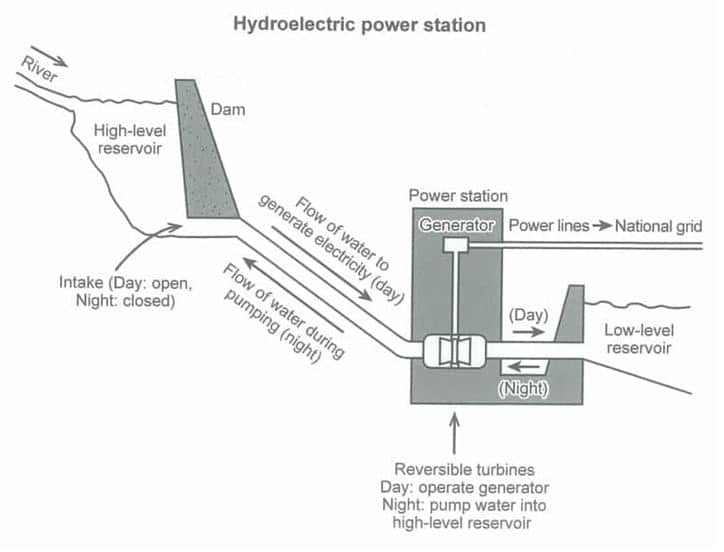
The given diagram illustrates the process by which electricity is produced within a hydroelectric power station.
It is clear that the process includes different stages beginning with the water flow the river to a high-level reservoir and ending with electricity transmitting to a national grid.
The process commences with the river water stored in a high-level reservoir constructed by constructing a dam to prevent river flow.
Following this, an intake opened during the daytime and closed at night allows water to flow to reversible turbines to produce electricity. By this step, these turbines operate a generator in a power station to generate power lines which are then transmitted to the national grid system. Additionally, water is released into a low-level reservoir daytime for storage but in the nighttime, it is pumped back into the reversible turbines that produce a push to pump water back to the high-level reservoir, ready for daytime activities.
Get the Weekly English Kit 📬
New words, one handy idiom, and a 2-minute quiz — delivered to your inbox to keep your streak alive.
 Related Questions