
Please Help Me With My Essay - IELTS Task 2
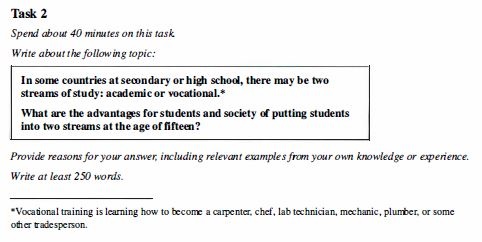
In several countries, students at the age of fifteen are oriented to their career paths so that they can best prepare for the future. Therefore, educational programs at secondary or high schools are divided into two streams: academic study and vocational training. Offering students these two options would bring them various advantages including the focus on their strengths or interests and pressure reduction. The social labor market would benefit from this as well.
First, having the choice to decide a stream of study allows students to pursue their interests and develop their strengths. Students could select a program which delivers objectives that they may want to achieve and fields that they would like to learn. For example, those who aim to follow the research path in maths or science-related subjects can take up academic study and fully concentrate on it without worrying about finishing other tasks beyond their focus. Subsequently, students could put sufficient time and efforts that their streams require. It increases their chances of practicing or obtaining necessary knowledge so as to improve their understanding and skills of the study.
Another advantage of separating the learning programs into two streams is to lessen the pressure from having to complete much school work simultaneously. Students at secondary or high schools of some countries typically have over ten subjects to learn, including those that their personal goals do not demand. For example, high school education in Vietnam consists of 12 different compulsory subjects varying from Maths, Biology, Chemistry to Geography and History. Besides tests, many teachers require students to do projects, assignments and groupwork relating to the subjects, which urges them to spend a lot of time finishing. That causes frequent stress and heavy workload for the students. Therefore, providing the students with two streams of study truly prevents them from huge amounts of mental suffering.
Not only do the students benefit from this, the society’s workforce could also take advantage of it. Putting students in two learning programs helps determine the future human resources for two basic groups of work relating to physical and mental efforts. In addition, graduates would gain a proper perspective towards the occupations that they possibly follow. Students with a focus on engineering, for example, have more opportunities to familiarize themselves with machines or electrical equipment during their vocational training. After graduation, they will easily adapt to the professional working environment, which reduces much time and money that the companies or offices spend training them.
In conclusion, the division into two streams of study at secondary and high schools in various countries is undeniably beneficial to the students and our society. Noticeably, it would decrease the mental burden on the students and provide them with opportunities to follow their pursuits. It also helps the labor market to achieve balance in the workforce of different fields.
(470 words)
-----------------------------------------------------
Thank you for reviewing my essay!
Top answer
In several countries, students at the age of fifteen are oriented to their career paths so that they can best prepare for the future. Therefore, educational programs at secondary or high schools are divided into two streams: academic study and vocational training. Offering students these two options would bring them various advantages including focusing the focus on their strengths or interests and reducing pressure to achieve.
- In several countries, students at the age of fifteen are oriented to their career paths so that they can best prepare for the future.
- Therefore, educational programs at secondary or high schools are divided into two streams: academic study and vocational training.
- Offering students these two options would bring them various advantages including focusing the focus on their strengths or interests and reducing pressure to achieve.
- pressure reduction .
- The social labor market would benefit from this as well.
Get the Weekly English Kit 📬
New words, one handy idiom, and a 2-minute quiz — delivered to your inbox to keep your streak alive.
In several countries, students at the age of fifteen are oriented to their career paths so that they can best prepare for the future. Therefore, educational programs at secondary or high schools are divided into two streams: academic study and vocational training. Offering students these two options would bring them various advantages including focusi
 0
0 Related Questions