
Please help me with ielts writing task 1
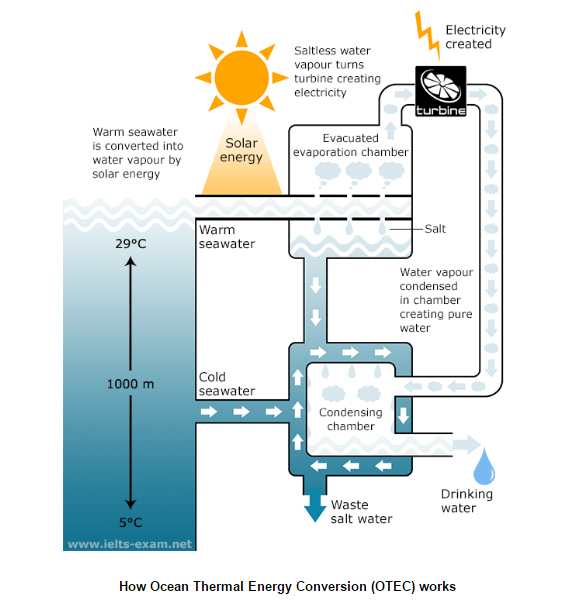
The figure illustrates how electric power and drinking water are produced by using a process called Ocean Thermal Energy Conversion (OTEC).
There are four major stages in the system with three main components, which are an evacuated evaporation chamber, a turbine and a condensing chamber.
At the beginning of the process, the solar energy of the sun heats up the surface water and this warm water is transmitted into the evacuated evaporation chamber, where it boils. On the other hand, the water from the depths of the ocean passes around the condensing chamber to make it cool. At the second stage, the boil water creates the vapour water, and salt is deposited. This vapour then drives the turbine to generate electricity.
After the turbine is powered, the water vapour enters the condensing chamber, where it is condensed to produce drinking water in the end. Meanwhile, waste salt water is discharged into the ocean and the process can be repeated.
Top answer
Here are my suggestions: The figure illustrates how electric power and drinking water are produced by using a process called Ocean Thermal Energy Conversion (OTEC). There are four major stages in the system , which requires with three main components : , which are an evacuated evaporation chamber, a turbine , and a condensing chamber. ] At the beginning of the process, the solar energy of the sun heats up the surface water and this warm water is transmitted into the evacuated evaporation chamber, where it boils.
- Here are my suggestions: The figure illustrates how electric power and drinking water are produced by using a process called Ocean Thermal Energy Conversion (OTEC).
- There are four major stages in the system , which requires with three main components : , which are an evacuated evaporation chamber, a turbine , and a condensing chamber.
- ] At the beginning of the process, the solar energy of the sun heats up the surface water and this warm water is transmitted into the evacuated evaporation chamber, where it boils.
- Meanwhile On the other hand, the cold water from the depths of the ocean passes around the lower condensing chamber where it will later cool the steam .
- [ No steam is yet ready to cool ] [ New paragraph ] At the second stage, the boil ing water creates the water vapour water , and leaving the salt behind is deposited .
Get the Weekly English Kit 📬
New words, one handy idiom, and a 2-minute quiz — delivered to your inbox to keep your streak alive.
Here are my suggestions:
The figure illustrates how electric power and drinking water are produced by using a process called Ocean Thermal Energy Conversion (OTEC).
There are four major stages in the system, which requires with three main components: , which are an evacuated evaporation chamber, a turbine, and a condensing chamber.
 0
0 Related Questions