
Please evaluate my IELTS Writing Task 1 Academic
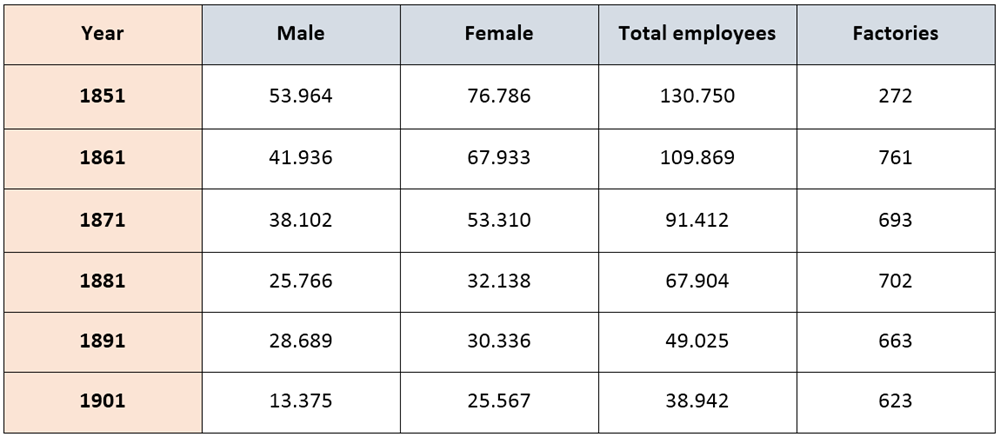
The table gives information about the figures for workers and factories generating silk in two countries of Great Britain from 1851 to 1901.
Overall, it is clear that there was a downward trend in the total number of employees, and that significantly more women than men in this industry. Also, despite some fluctuations, the number of factories producing silk increased over the period shown.
In 1851, 130.750 employees were recruited to produce silk, including 76.786 women and 53.964 men. Over the following 20 years, while the total figure witnessed a decrease of nearly 40.000 workers, the female employees were still more than men. By contrast, the number of factories was lowest in 1851, at only 272. However, this figure had almost tripled ten years later, which was followed by a slight decline to 693 in 1871.
From 1881 to 1901, the downward trend in the number of people working in this industry continued. In 1901, the total number of workers was 38.942, including 25.567 women and 13.375 men, less than one-third of the figure in 1851. On the other hand, the figure for factories fluctuated between 600 and 700 over the last 30 years of the period.
Get the Weekly English Kit 📬
New words, one handy idiom, and a 2-minute quiz — delivered to your inbox to keep your streak alive.
 Related Questions