
Please check my writing task 1. Thank you.
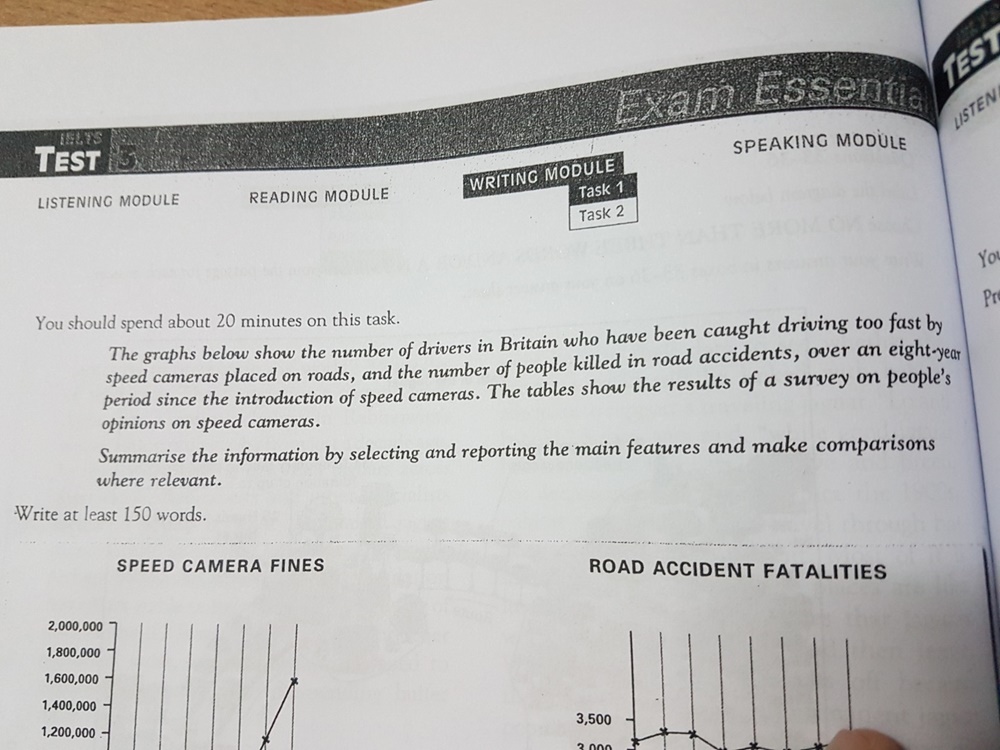
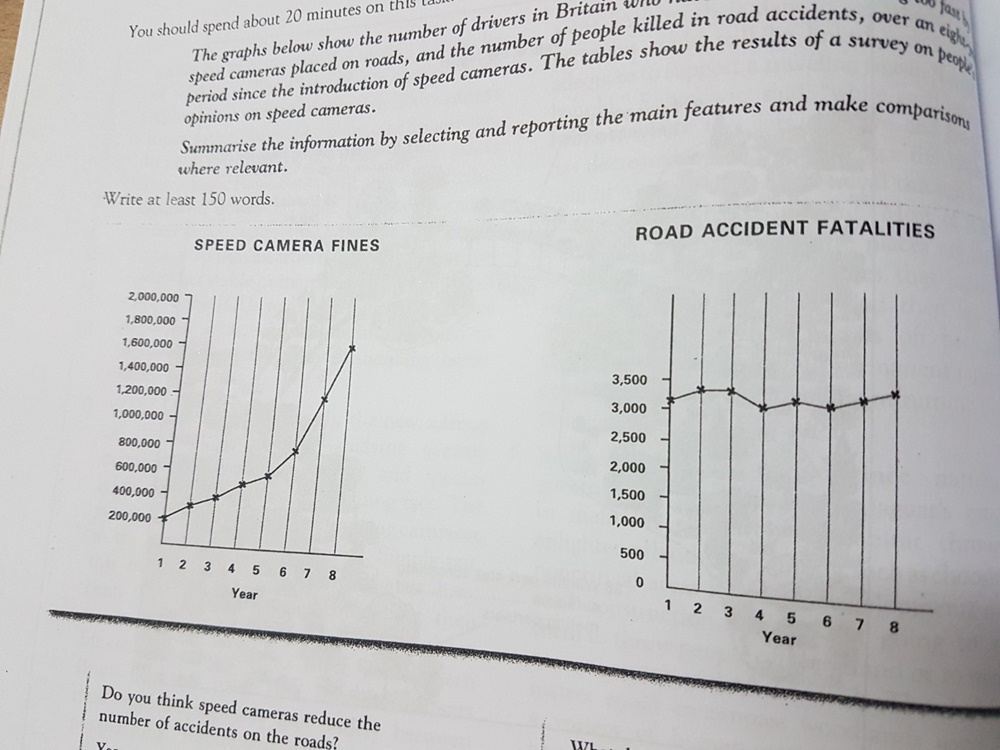
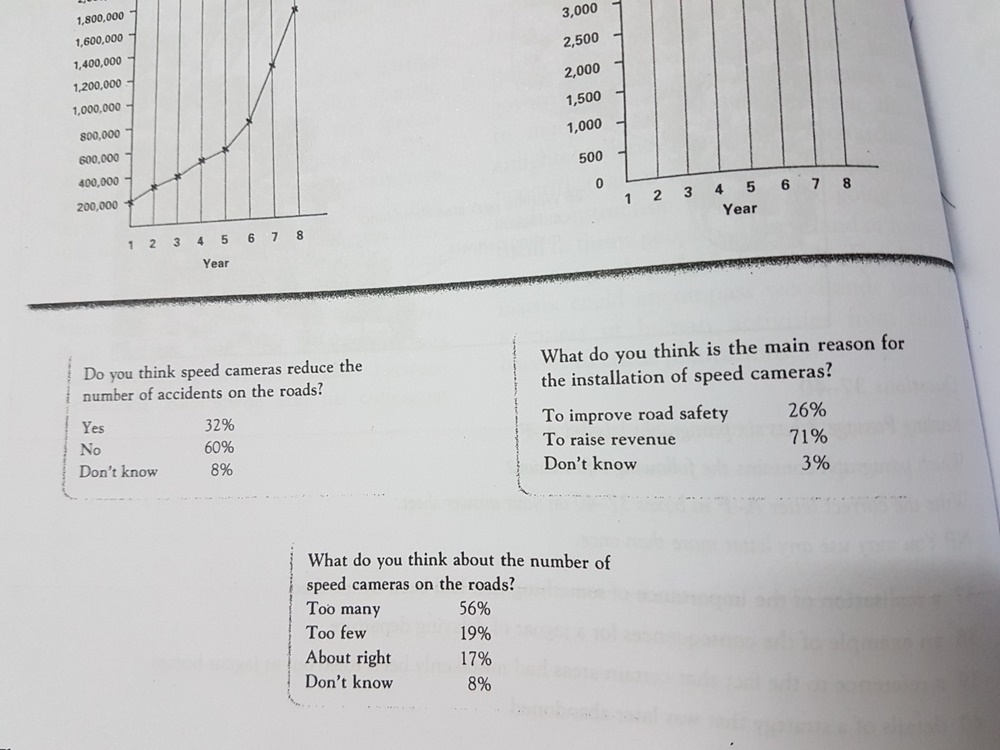
While the graphs illustrate the number of Britain drivers who have been detected driving too fast by cameras installed on roads, as well as the number of casualties over an eight-year-period; the tables give information on how people think about speed cameras via a poll result. In general, even though more and more drivers are fined, the number of deaths caused by traffic accident changes slightly with the negative opinion of citizens against speed cameras.
It can be seen obviously that the number of drivers violating speed limit rises dramatically, starting at 200.000 and then rocket to 1.600.000 in the period. In other words, the data for careless drivers in the 8th year is eight times higher than in the 1st year. In contrast, the number of fatalities caused by road accidents fluctuates with small dips in the 4th and 6th years.
Clear perspectives of people about speed cameras can be drawn from the tables. Nearly two-third of participants think that speed cameras are ineffective in reducing traffic collisions. In addition, 74% of interviewees believe that the purpose of setting up cameras is not for road safety and more than half subscribe to the idea that those cameras are redundant
Top answer
What test is this? It seems much more complicated than the typical IELTS Writing Task 1. I will comment based on the expectations for writing IELTS Task 1, but you can ignore these if it is not this particular test.
- What test is this?
- It seems much more complicated than the typical IELTS Writing Task 1.
- I will comment based on the expectations for writing IELTS Task 1, but you can ignore these if it is not this particular test.
- While the graphs illustrate the number of Britain drivers who have been detected driving too fast by cameras installed on roads, as well as the number of casualties over an eight-year-perio d; (wrong punctuation) the tables give information on how (wrong word) people think about speed cameras via a poll result.
- (Unnatural expression) In general, even though more and more drivers are fined, the number of deaths caused by traffic accident changes slightly with the negative opinion of citizens against speed cameras.
Get the Weekly English Kit 📬
New words, one handy idiom, and a 2-minute quiz — delivered to your inbox to keep your streak alive.
What test is this? It seems much more complicated than the typical IELTS Writing Task 1.
I will comment based on the expectations for writing IELTS Task 1, but you can ignore these if it is not this particular test.
While the graphs illustrate the number of Britain drivers who have been detected driving too fast by cameras installed on roads, as well as the number of casualtie
 0
0 Related Questions