
IELTS WRITING TASK 1 PROCESS
PLEASE EVALUATE MY WRITING. THANK YOU SO MUCH!
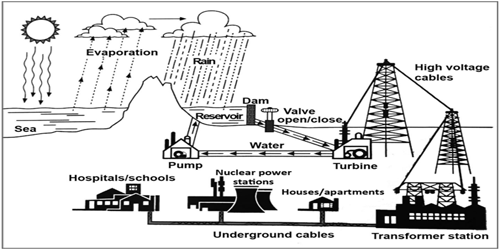
The diagram outlines the principal stages involved in the generation of hydro-electrical power.
Looking at the diagram, it is clear that the process commences with water in the ocean and ends with electricity being transferred to relevant infrastructure.
The procedure for producing hydro-electrical power begins when seawater is heated under the sun and evaporates to form clouds. When water droplets get too heavy to stay suspended in these clouds, rains occur, following which rainwater is stored in a reservoir behind a dam controlled by a valve. Once the valve is opened, the water flows into the turbine and rotates it to produce electrical currents. Afterwards, the electricity is sent through high voltage cables to the transformer station, in which it is transmitted to houses and other public facilities.
An extra point to note is that after water passes through the turbin, it is pumped back to the reservoir so that the cycle can repeat to generate electrical power.
Top answer
The diagram outlines illustrates the principal stages involved in the generation of hydro-electric al power. Looking at the diagram, it is clear that the process commences with water in the ocean and ends with electricity being transferred to relevant infrastructure. In a cyclical process, there is no "beginning" and "end".
- The diagram outlines illustrates the principal stages involved in the generation of hydro-electric al power.
- Looking at the diagram, it is clear that the process commences with water in the ocean and ends with electricity being transferred to relevant infrastructure.
- In a cyclical process, there is no "beginning" and "end".
- There are two cycles here, the natural water cycle and a man-made process.
- The natural water cycle is not really relevant to the production of electricity.
Get the Weekly English Kit 📬
New words, one handy idiom, and a 2-minute quiz — delivered to your inbox to keep your streak alive.
The diagram outlines illustrates the principal stages involved in the generation of hydro-electrical power.
Looking at the diagram, it is clear that the process commences with water in the ocean and ends with electricity being transferred to relevant infrastructure.
In a cyclical process, there is no "be
 0
0 Related Questions