
IELTS Writing task 1
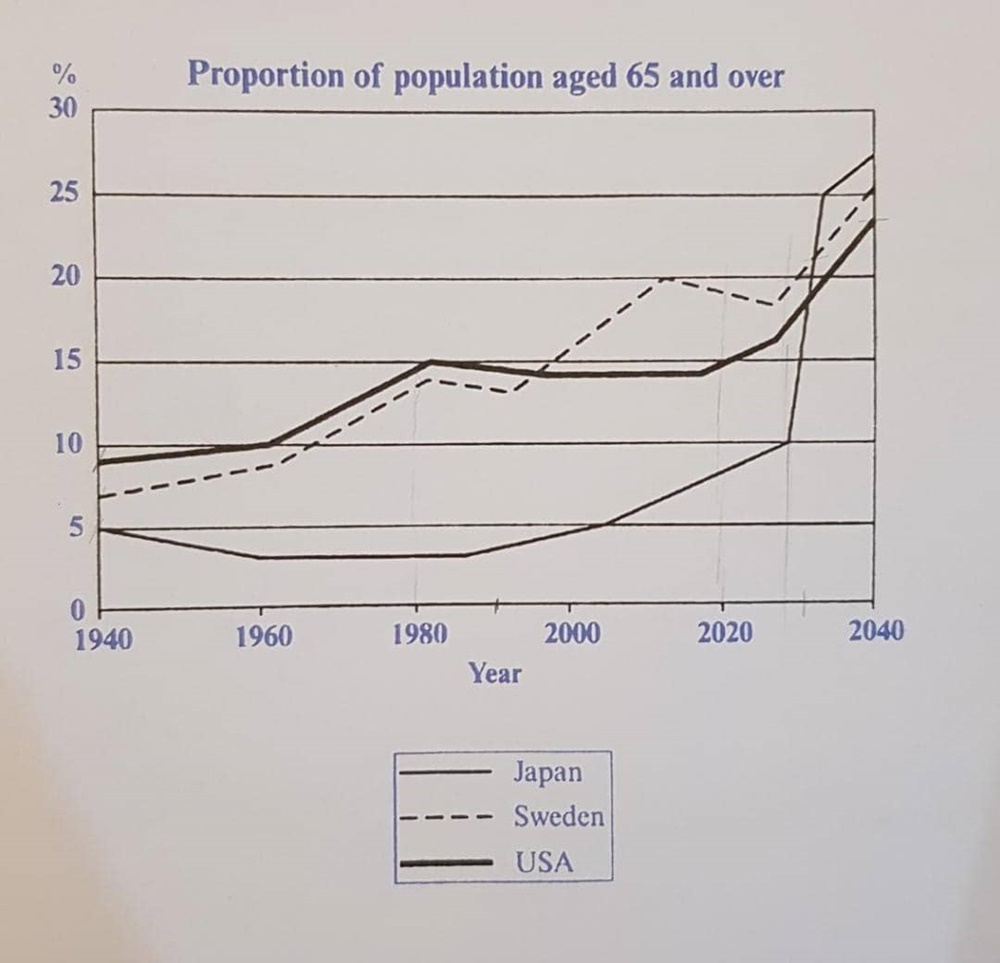
The graph below shows the proportion of the population aged 65 and over between 1940 and 2040 in three different countries.
Summarise the information by selecting and reporting the main features, and make comparisons where relevant.
The graph shows the population aged 65 and beyond between the years 1940 and 2040 in Japan, Sweden, and
the USA.
In the year 1940, the population of older people in three countries was between 5% to 8%. Japan was the lowest and USA was the highest. The population was normally rising, but in the year 1980, the community of the older from USA and Sweden rise but Japan has decrease compare to 40 years ago.
Around the year 2028, the society of 65 years and beyond suddenly increase, and it becomes between 10% to 20%, still Japan has the lowest old population between two other countries. Two years later, the proportion increases by 15%, and it becomes equal to Sweden.
In the last year of the graph, Japan becomes the first country in the old population, and it rises 5% in 10 years. Also, the population of older adults becomes 25% in Sweden. Moreover, the USA with a difference of 9% from Japan becomes the third country that has an aged society.
(I would be appreciated if you could give me a score based on IELTS exams.)
Top answer
The graph shows the percentage of the population aged 65 or older and beyond (unnatural) between the years 1940 and 2040 in Japan, Sweden, and the USA. (You need to have a paragraph here with two or three "main features". " Please read my advice for Task 1 essays: IELTS TASK 1: Hints, Tips And Advice Vocabulary Words For Task 1: Reference Post ) In the year 1940, the population of older people in these three countries (You must have a determiner - the or these to identify the three you are describing.
- The graph shows the percentage of the population aged 65 or older and beyond (unnatural) between the years 1940 and 2040 in Japan, Sweden, and the USA.
- (You need to have a paragraph here with two or three "main features".
- " Please read my advice for Task 1 essays: IELTS TASK 1: Hints, Tips And Advice Vocabulary Words For Task 1: Reference Post ) In the year 1940, the population of older people in these three countries (You must have a determiner - the or these to identify the three you are describing.
- ) was between 5% to 8%.
- Japan was the lowest and USA was the highest.
Get the Weekly English Kit 📬
New words, one handy idiom, and a 2-minute quiz — delivered to your inbox to keep your streak alive.
The graph shows the percentage of the population aged 65 or older and beyond (unnatural) between the years 1940 and 2040 in Japan, Sweden, and the USA.
(You need to have a paragraph here with two or three "main features". That respond
 0
0 Related Questions