
IELTS Writing Task 1
Can you check for me, please? Thank you so much.
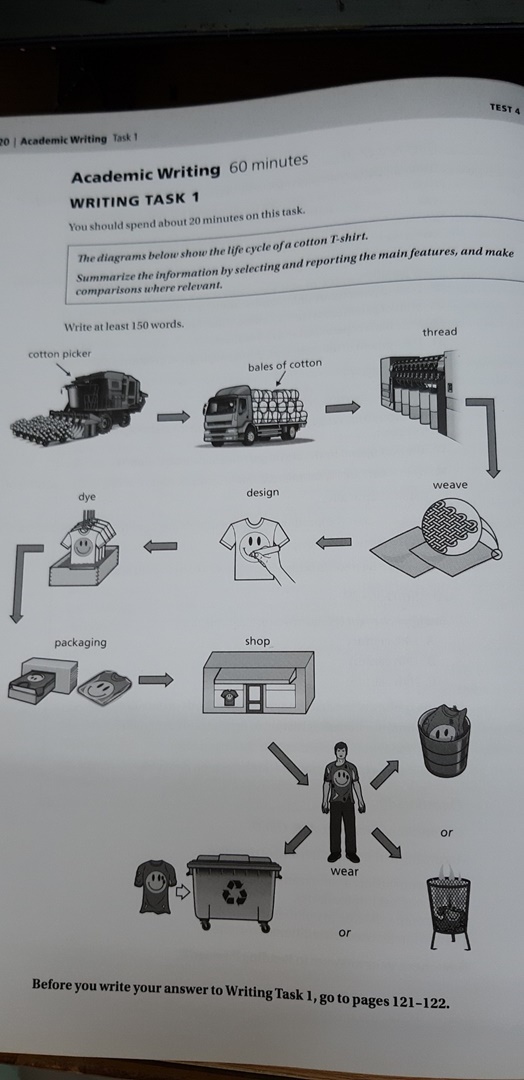
The diagrams illustrate the life cycle of a cotton T-shirt. It is clear that from the growth of the cotton to the throwing away, incinerating or cycling of the garment, there are multiple stages in the life cycle.
First of all, the cotton bushes grow and produce cotton. At the harvesting stage, the cotton is picked by a machine called a cotton picker. Then it is converted into the bales which are transported to the manufactures by lorry. Following the design stage, the finished cloth is sent to a manufacturer to be dyed and made into a T-shirt. The fabric must be treated for color before it is ready to ship. After coloring, it is sent for cutting and sewing. T-shirts which are made from the fabric are propelled towards packaging. Those packages are dispatched to shops where it is bought by a consumer. The consumer wears those t-shirts. After its usage, they throw in the trash bin. However, the best way of disposal is recycling.
Top answer
The diagrams illustrate the life cycle of a cotton T-shirt. It is clear that from the growth of the cotton to the throwing away, incinerating or cycling (awkward) of the garment, there are multiple stages in the life cycle. ) First of all, the cotton bushes grow and produce cotton.
- The diagrams illustrate the life cycle of a cotton T-shirt.
- It is clear that from the growth of the cotton to the throwing away, incinerating or cycling (awkward) of the garment, there are multiple stages in the life cycle.
- ) First of all, the cotton bushes grow and produce cotton.
- At the harvesting stage, the cotton is picked by a machine called a cotton picker.
- Then it is converted compacted into the bales which are transported to the manufactures (cloth-making factories) by lorry where it is woven into fabric.
Get the Weekly English Kit 📬
New words, one handy idiom, and a 2-minute quiz — delivered to your inbox to keep your streak alive.
The diagrams illustrate the life cycle of a cotton T-shirt. It is clear that from the growth of the cotton to the throwing away, incinerating or cycling (awkward) of the garment, there are multiple stages in the life cycle. (Suggestion: There are nine stages in its life cycle, starting with the cotton plant and ending in dispo
 0
0 Related Questions