
IELTS WRITING TASK 1
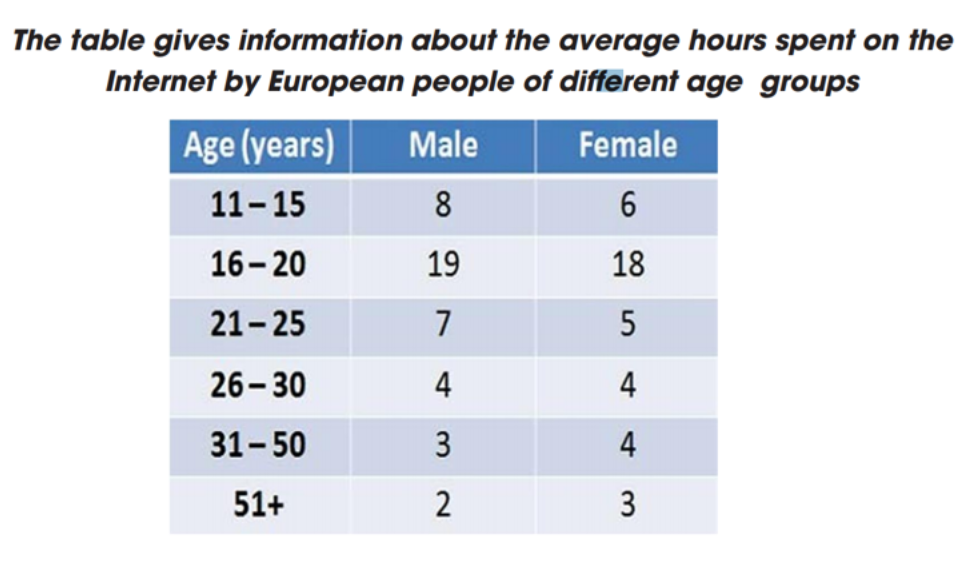
The table compares the average weekly hours various age groups spend on the Internet in Europe.
Overall, younger people tend to spend more time on the Internet than those in the older age brackets, and Internet usage is at its highest for those aged between 16 and 20. Younger men spend slightly longer online than their women counterparts, while the trend is reversed for older people.
From 21 onwards, the hours spent using the Internet drop significantly. Men and women in their 26-30's spend the same amount of time online with only 4 hours each. The elder people are the least likely to go online, with the figures for males being 2 hours and females just one hour more.
The 16-20 years old spend the longest time on the Internet. Males in this age group spend 19 hours online, while females spend 18 hours. The figures for men and women aged between 11 and 15 are lower, at 8 hours and 6 hours respectively.
Top answer
The table compares the average weekly hours various age groups spend on the Internet in Europe. Overall, younger people tend to spend more time on the Internet than those in the older age brackets, and Internet usage is at its highest for those aged between 16 and 20. Younger men spend slightly longer time online than their women counterparts, while this the trend is reversed for older people.
- The table compares the average weekly hours various age groups spend on the Internet in Europe.
- Overall, younger people tend to spend more time on the Internet than those in the older age brackets, and Internet usage is at its highest for those aged between 16 and 20.
- Younger men spend slightly longer time online than their women counterparts, while this the trend is reversed for older people.
- " There is a trend: the older these Europeans get, the less time they spend online.
- Trends are persistent increases or decreases in some value as a function of time.
Get the Weekly English Kit 📬
New words, one handy idiom, and a 2-minute quiz — delivered to your inbox to keep your streak alive.
The table compares the average weekly hours various age groups spend on the Internet in Europe.
Overall, younger people tend to spend more time on the Internet than those in the older age brackets, and Internet usage is at its highest for those aged between 16 and 20. Younger men spend slightly longer time online than their women counterparts, w
 0
0 Related Questions