
IELTS TASK 1 - Please help me check my essay
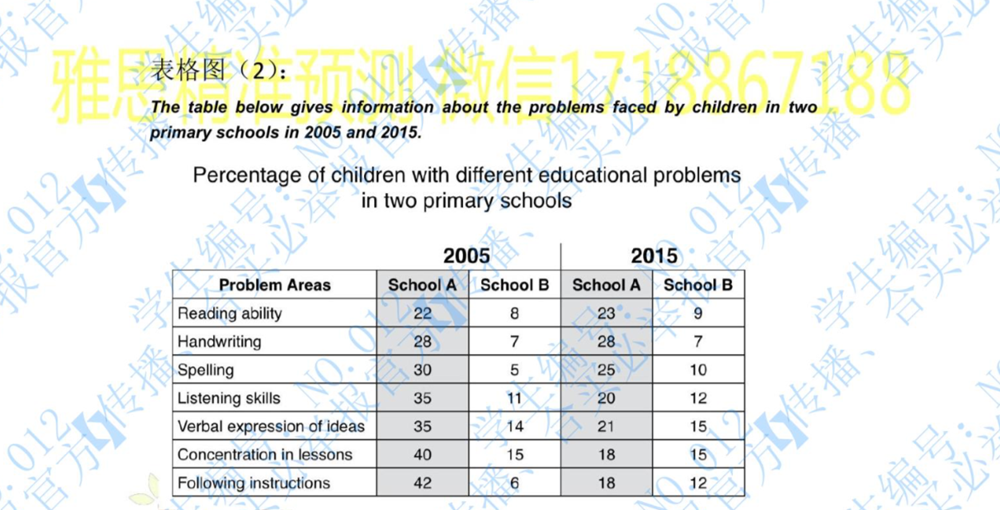
The table shows the data for problems that primary students faced in two different schools between 2005 and 2015.
Overall, school A had a higher proportion of children will all problems in both years. However, school B witnessed a slight increase in the percentage of children with educational issues over a period of 10 years.
According to the table, in 2005, 42% of students at school A had difficulties in following instructions, while this figure for that in school B was only 6%. Similarly, the percentage of children who experienced problems including spelling, listening and verbal expression of ideas were recorded between 30% and 40% in school A. In contrast, only 10% to 15 % of students in school B faced same issues.
In the period from 2005 to 2015, the percentage of children with problems like following instructions and concentration in lessons underwent a sharp decrease, to 18%. Other problem areas including verbal expression of ideas, listening skills and spelling also experienced a marginal declined, to 21%, 20%, 25% respectively. In school B, the percentage of kids faced following instructions and spelling doubled to 12% and 10% respectively, while the figures for students with other problems stayed at the same level.
Get the Weekly English Kit 📬
New words, one handy idiom, and a 2-minute quiz — delivered to your inbox to keep your streak alive.
 Related Questions