
IELTS TASK 1 - BAR CHART - Please Check This Summary
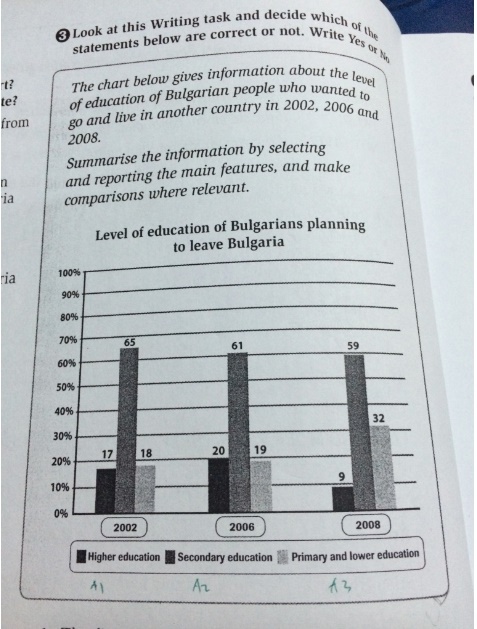
The bar chart compares the level of education of Bulgarians who planned to emigrate into other countries at three different points of time: 2002, 2006, and 2008.
Overall, the majority of Bulgarian people who wanted to go and live in another country was secondary learners. While the proportion of people with higher education fell sharply, the opposite trend was true for the percentage of primary or lower education Bulgarians who decided to leave their country.
The highest percentage of people in all three years as those with secondary education. This figure fell slightly throughout the six-year period, from 65% in 2002 to 61% in 2006 and 59% in 2008. In contrast, there was a significant change in other categories. In 2002, 17% of people with higher education and 18% of people with primary or lower education left Bulgarie and stayed another nation and that increased slowly at 20% and 19% in 2006, respectively. This percentage of people with primary or lower education saw a dramatical increase, stood ar 32% two years later and the opposite happened with the figures for people who had received higher education, fell by 11% in 2008.
Top answer
The bar chart compares the level of education of Bulgarians who planned to emigrate in t o other countries at three different points of in time: 2002, 2006, and 2008. Overall, the majority of Bulgarian people who wanted to go and live in another country was had a secondar y education. learners.
- The bar chart compares the level of education of Bulgarians who planned to emigrate in t o other countries at three different points of in time: 2002, 2006, and 2008.
- Overall, the majority of Bulgarian people who wanted to go and live in another country was had a secondar y education.
- learners.
- While the proportion of people with higher education fell sharply over the period in question , the opposite trend was true for the percentage of those with primary or lower educatio n.
- Bulgarians who decided to leave their country.
Get the Weekly English Kit 📬
New words, one handy idiom, and a 2-minute quiz — delivered to your inbox to keep your streak alive.
The bar chart compares the level of education of Bulgarians who planned to emigrate in to other countries at three different points of in time: 2002, 2006, and 2008.
Overall, the majority of Bulgarian people who wanted to go and live in another country was
 0
0The bar chart compares the level of education of Bulgarians who planned to emigrate in to other countries at three different points in time: 2002, 2006, and 2008.
Overall, the majority of Bulgarian people who wanted to go and live in another country had a secondary education. While the proportion of people with higher education fell sharply over the period in question, the opposite trend
0 Related Questions