
How can I separate this part?
This is an excerpt from a book:
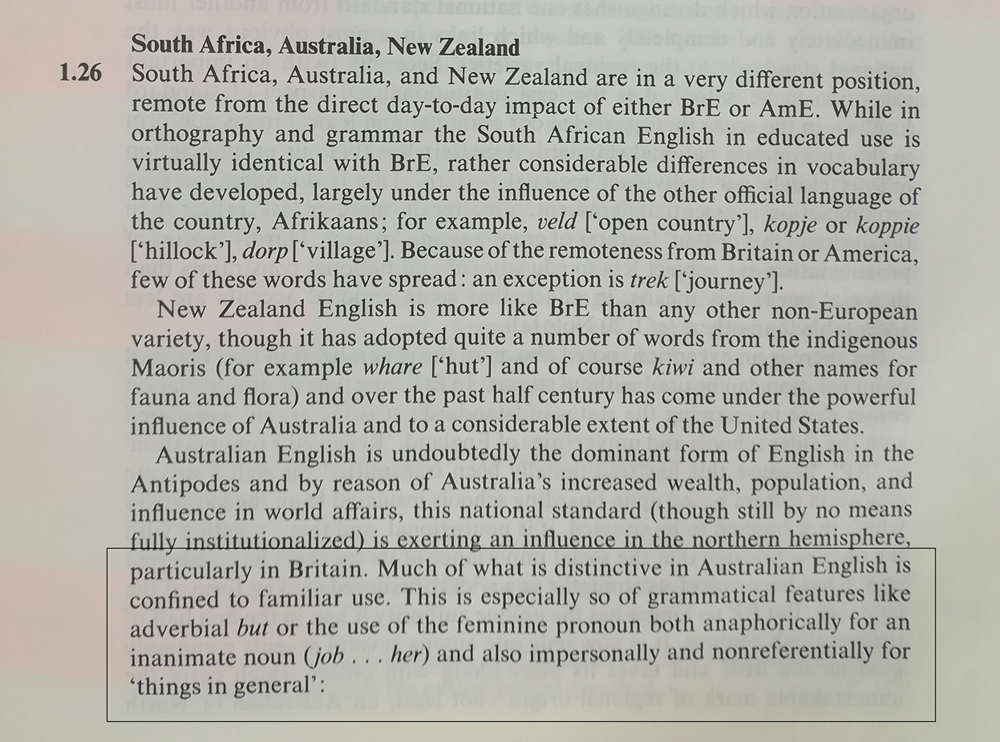
"Much of what is distinctive in Australian English is confined to familiar user. This is especially so of grammatical features like adverbial but or the use of the feminine pronoun both anaphorically for an inanimate noun(job ... her) and also impersonally and nonreferentially for 'things in general':
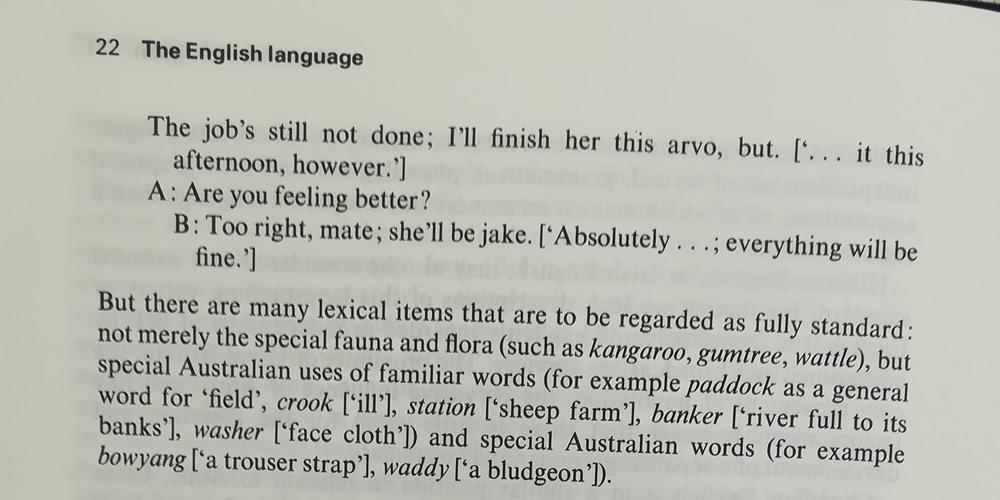
The job's still not done; I'll finish her this arvo, but. ['... it this afternoon, however.']
A:Are you feeling better?
B:Too right, mate; she'll be jake. ['Aboslutely ...; everything will be fine.']"
I'm wondering where I can separate this part:
"both anaphorically for an inanimate noun(job ... her) and also impersonally and nonreferentially for 'things in general"
I think I can separate that into "anaphorically for an inanimate noun(job ... her) and also impersonally" and "and nonreferentially for 'things in general", because, the second "and" has also before it, then it connects to before it.
Am I right in thinking that way?
Top answer
I would split it into these two things: anaphorically for an inanimate noun ( job ... her ) impersonally and nonreferentially for 'things in general'
- I would split it into these two things: anaphorically for an inanimate noun ( job ...
- her ) impersonally and nonreferentially for 'things in general'
Get the Weekly English Kit 📬
New words, one handy idiom, and a 2-minute quiz — delivered to your inbox to keep your streak alive.
I would split it into these two things:
anaphorically for an inanimate noun (job ... her)
impersonally and nonreferentially for 'things in general'
 0
0Takehisa TanakaI think I can separate that into "anaphorically for an inanimate noun(job ... her) and also impersonally" and "and nonreferentially for 'things in general", because, the second "and" has also before it, then it connects to before it.
I don't understand your point at all.
Takehisa Tanaka"
0 Related Questions