
0
Rex Posted 20 years ago
Grammar
Dawn vista
Could you please look at the following and tell me the meaning of the words 'dawn vista'?
European citizens
When Hungary, and nine other, mostly east European countries joined the European Union in 2004, the EU Roma population increased by more than 1.5 million.
The dawn vista which greets them, as they step down from their metaphorical wagons, is probably the brightest they have seen since they began their long trek westwards from India, in the 11th Century, thanks to the human rights agenda of the union.
Back in their national wagons though, significant problems remain.
They live in slum-like ghettos on the edge of towns, in almost purely Roma villages in the east, and in the poorer pockets of the capitals.
They are proud of the remnants of their musical and craft traditions, and the little pools of words they have preserved like pearls, but live for the most part in abject poverty.
People say that more than half the prison population in Hungary is Roma, though there are no statistics.
Under the 1993 Data Protection Act, the little "c" for cigany - gypsy - which appeared beside their names in public records, was banned.
One of the first interviews I did in Hungary, in the mid-1980s, was with the Roma novelist Menyhert Lakatos.
"There were times in this country when we were killed or maimed on sight," he told me.
And one of his books begins with a pathetic troop of gypsies on a country road, their ears cut off.
"Can you be surprised," Lakatos continued, "if we sometimes see the chickens and wallets of Hungarians as fair game?"
European citizens
When Hungary, and nine other, mostly east European countries joined the European Union in 2004, the EU Roma population increased by more than 1.5 million.
The dawn vista which greets them, as they step down from their metaphorical wagons, is probably the brightest they have seen since they began their long trek westwards from India, in the 11th Century, thanks to the human rights agenda of the union.
Back in their national wagons though, significant problems remain.
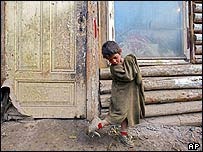 Around 10 to 12 million Roma live in Europe, many in the Balkans |
They are proud of the remnants of their musical and craft traditions, and the little pools of words they have preserved like pearls, but live for the most part in abject poverty.
People say that more than half the prison population in Hungary is Roma, though there are no statistics.
Under the 1993 Data Protection Act, the little "c" for cigany - gypsy - which appeared beside their names in public records, was banned.
One of the first interviews I did in Hungary, in the mid-1980s, was with the Roma novelist Menyhert Lakatos.
"There were times in this country when we were killed or maimed on sight," he told me.
And one of his books begins with a pathetic troop of gypsies on a country road, their ears cut off.
"Can you be surprised," Lakatos continued, "if we sometimes see the chickens and wallets of Hungarians as fair game?"
Top answer
The vista is the view; the dawn is the early morning, and the beginning of a new day where everything could happen. Here it is used metaphorically (cf the wagons), and it means "the vision of their future".
- The vista is the view; the dawn is the early morning, and the beginning of a new day where everything could happen.
- Here it is used metaphorically (cf the wagons), and it means "the vision of their future".
Get the Weekly English Kit 📬
New words, one handy idiom, and a 2-minute quiz — delivered to your inbox to keep your streak alive.
3 Answers
0
The vista is the view; the dawn is the early morning, and the beginning of a new day where everything could happen. Here it is used metaphorically (cf the wagons), and it means "the vision of their future".
 0
00
0
It seems the Roma (gypsies) are being badly treated by the Hungarians. So nobody would be surprised if they wanted to take a revenge on the Hungarians by stealing their chickens and their wallets. It would be "fair game" .
0 Related Questions