
AUXILIARY VERB
Hi,
I was wondering why the lecturer has labeled 'is' as 'auxiliary' in the following YouTube video. Could it be justified in any way, or is it simply a mistake?
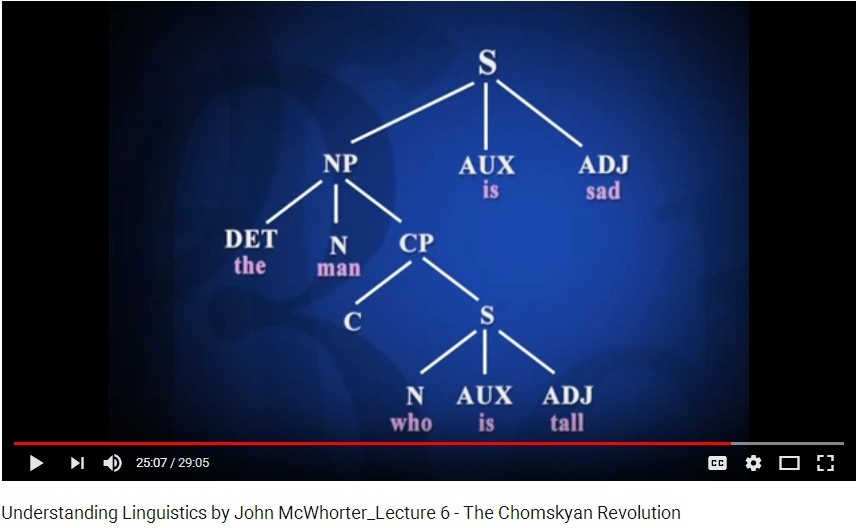
Thanks.
Top answer
Persian Learner I was wondering why the lecturer has labeled 'is' as 'auxiliary' in the following YouTube video. Could it be justified in any way, or is it simply a mistake? As far as I know, the newer approaches to English grammar call be an auxiliary in all cases — not just when it's followed by a participle.
- Persian Learner I was wondering why the lecturer has labeled 'is' as 'auxiliary' in the following YouTube video.
- Could it be justified in any way, or is it simply a mistake?
- As far as I know, the newer approaches to English grammar call be an auxiliary in all cases — not just when it's followed by a participle.
- I suppose the role of be is kept more consistent that way.
- This is not part of what is called "traditional grammar", as you already know.
Get the Weekly English Kit 📬
New words, one handy idiom, and a 2-minute quiz — delivered to your inbox to keep your streak alive.
Persian LearnerI was wondering why the lecturer has labeled 'is' as 'auxiliary' in the following YouTube video. Could it be justified in any way, or is it simply a mistake?
As far as I know, the newer approaches to English grammar call be an auxiliary in all cases — not just when it's followed by a participle. I suppose the role of be is kept
 0
0Persian LearnerI was wondering why the lecturer has labeled 'is' as 'auxiliary' in the following YouTube video. Could it be justified in any way, or is it simply a mistake?
No, it's not a mistake. For very good reasons, "be" is virtually always an auxiliary verb even when it is the only verb in the clause.
The "virtually" qualification relates to the
0In Chomsky's theory of Transformation Grammar, there is an operation of subject-auxiliary inversion. The rule for making interrogative sentences from declarative sentences is to invert the subject and auxiliary. In this application, the AUX is has:
John has eaten his lunch. -> transformation rule -> Has John eaten his lunch?
To extend the rule to senten
0 Related Questions